Environmental Destination
Water is essential for life, the economy and the health of our natural environment. Our rivers, lakes, and groundwater support everything from households and business supplies to food production, recreation and energy generation. To manage our water resources sustainably, we must balance society’s needs with those of the environment so that both can thrive over the long term.
Many waters in the United Kingdom are still under pressure from unsustainable abstraction. Climate change is intensifying these pressures: the record‑breaking summer of 2022 and 2025 demonstrated how hotter, drier conditions can reduce river flows, impact wildlife and threaten water supplies. Demand for water is also growing due to population increases, new housing, agricultural needs, energy production and expanding sectors such as data centres. Without proactive planning, the impacts could be severe—more frequent restrictions on water use, reduced crop yields and risks to food security. A healthy and resilient water environment is fundamental to sustainable growth, economic stability and progress towards net zero.
The Environment Agency has released a National Framework for Water Resources which sets out the government’s strategic objectives for water resource planning to address England’s long term water needs. This framework sets out challenging environmental objectives and describes how we will need to reduce the amount of water we abstract in order to enable rivers and streams to meet their sustainable environmental flow threshold. The data included in the National Framework can be used to help abstractors consider the scale of future change that may be needed to abstraction licences. This data is to be used as a starting point for the next round of Water Resources Management Plans.
WRW is supporting Public Water Supply (PWS) companies, who are assessing long‑term environmental requirements alongside future water demand to help identify the right mix of solutions—such as reducing leakage, improving efficiency, developing new infrastructure and supporting nature‑based approaches. PWS companies have prioritised their catchments based on the National Framework data and will be focussing on catchments where a reduction in water abstraction is required. So not all catchments will be covered in these investigations.
Each PWS company will use these investigations to develop a clear understanding of the rivers and groundwater in the area, along with current pressures linked to water abstraction and access to water. This will lead to a long-term strategy for abstractions, ensuring PWS companies deliver their ‘fair share’ in the catchment to improve, protect and enhance flow resilience as soon as technically possible and looking forwards to what may be needed in a changing climate. They will be looking for opportunities to work with other stakeholders and water users in the catchment where they can develop options together that will benefit the water resources situation in the catchment.
Our investigations this year will focus on how we can meet the environmental destination objectives for water companies in England described in the Environment Agency’s National Framework for Water Resources. WRW has worked with partners to establish principles for how water companies can engage non-PWS abstractors in those investigations, to support information sharing for mutual benefit and help identify mutually beneficial ways to cope with abstraction licence change. While these environmental destination targets have only been defined for catchments in England, we will also continue to work with Natural Resources Wales and our Welsh stakeholders to understand how we can ensure long term sustainable water abstraction and a healthy water environment.
What have we done so far and what have we got planned for this investigation?
We are working to a deadline of 31 December 2026 to deliver the first phase of Environmental Destination investigations. By this date we will have developed abstraction reduction scenarios, compiled a high-level list of potential options which enable the proposed reductions or support the ecological needs of the catchment and we will deliver a narrative of how we have come to our decisions.
During 2025:
WRW water companies have been working together and with regulators to agree the scope and methods for these investigations.
We have been analysing data and previous investigations to develop an understanding of the catchments and understand current flow pressures and impacts on ecology.
During 2026:
We will be holding engagement workshops to talk to other abstractors, water users and stakeholders to develop our understanding of the catchment and pressures on water. We will be looking for opportunities to get involved in existing projects and work with you to develop new opportunities to improve water resources and low flow conditions in the catchment. As they are confirmed, the workshops will be included in the catchment pages (links below) with a link to book your place through Eventbrite.
We will be undertaking modelling work to enhance the understanding of the catchment, look forwards at the potential impacts under one or more climate change scenarios. Along with information collated from stakeholders we will assess the EAs national framework reduction numbers to identify what reductions may be needed in the future to public water supply abstractions.
We will begin to prioritise the actions that are needed and develop an approach through the WRMP and regional plan to address these.
Help Needed From You
The Water Resource Teams within your local PWS companies have been working hard to build a baseline picture for the catchments. This helps us understand the current state of each catchment so we can identify where changes in water abstraction may be needed or where there are opportunities to support ecology. To do this effectively, we need to find the right mix of solutions to ease pressure on the local environment—and this is where your input and partnership is invaluable.
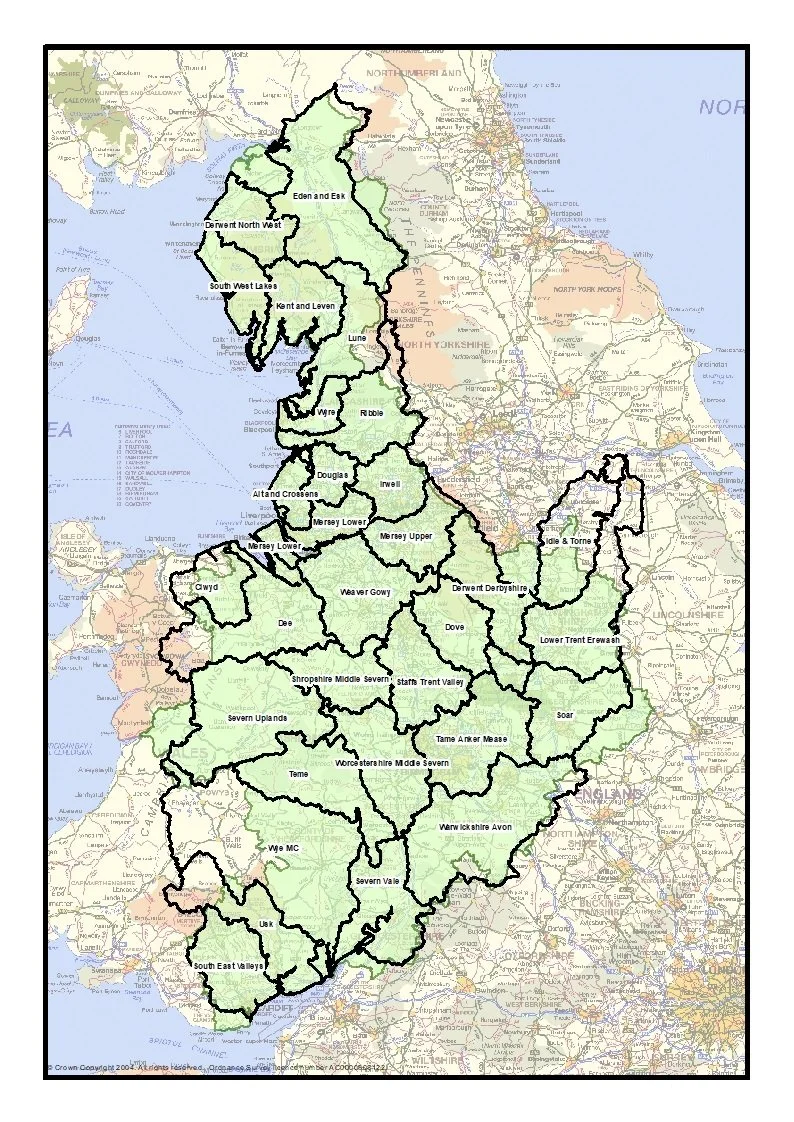
To the right, you’ll find a map showing each catchment, with links below (where we are ready) to their page. Each page includes:
Information about the catchment,
details of upcoming PWS company run local workshops, and
a contact form, for when attending a workshop isn’t practical
We know your time is precious, so whether you join a workshop or simply share your local knowledge through the contact form, your insights will help us build a more accurate and informed picture of each catchment.