
Environmental Destination
Worcester Middle Severn
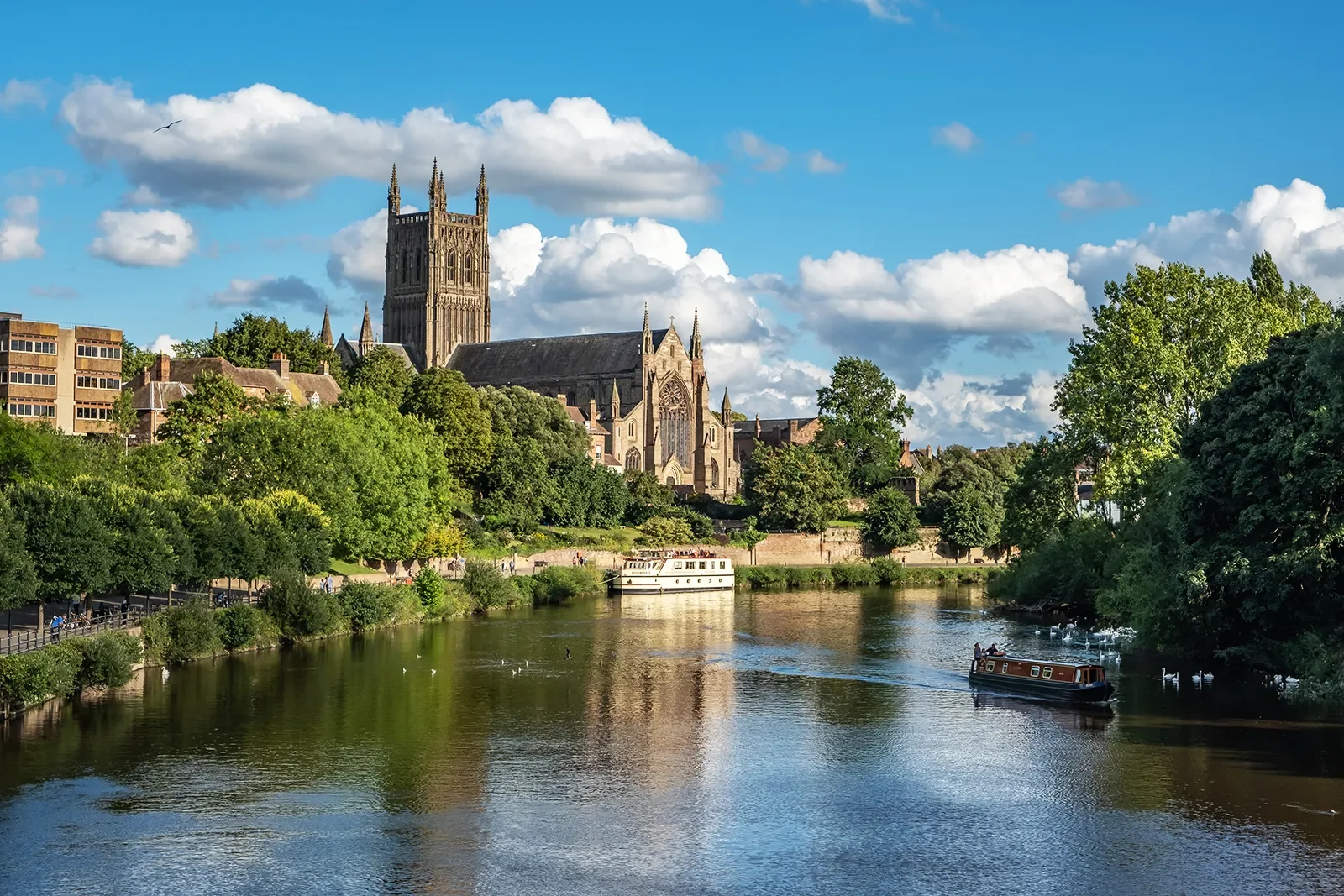
Our investigation covers parts of the Worcestershire Middle Severn Water Framework Directive Management Catchment. A large and diverse area that includes the Salwarpe River, Severn River Worcestershire, Shropshire West, Stour River and its tributaries, Stour Upper Worcestershire Rivers and Lakes, Telford South, and the Worfe Operational Catchments.
Geographically, this catchment stretches from southern Telford through Shropshire and into Worcestershire. It takes in key towns such as Bridgnorth, Kidderminster, Stourport, Bromsgrove and Droitwich, as well as the regional hub of Worcester. The landscape is highly varied, ranging from upland fringe and mixed farming areas to more intensively managed agricultural land, horticulture, orchards, and densely populated urban environments. The area also features the Staffordshire & Worcestershire Canal, the Worcester & Birmingham Canal, and several smaller canal arms, all maintained by the Canal & River Trust.
Environmental sensitivity is a defining characteristic of this catchment. It is home to important Groundwater Dependent Terrestrial Ecosystems, including the Wyre Forest SSSI (Sites of Special Scientific Interest) and Feckenham Forest SSSI. The River Severn runs north to south through the catchment, providing opportunities for navigation, fishing, canoeing, paddleboarding and wild swimming, while supporting extensive ecological networks. Despite its environmental value, the area faces ongoing challenges related to water quality, land‑use pressures, ecological decline and variable river flows.
For our Environmental Destination (ED) programme, we are focusing on a specific “area of interest” within the catchment, relevant to water company abstractions. Our focus is those surface water bodies where the public water supply companies actively abstract water or where their groundwater abstraction impacts on flow to surface waterbodies. This limits the investigation to 29 out of the 44 surface water bodies across the extent of the management catchment.
Thank you for your help!
Thank you to everyone who contributed to the Worcestershire Middle Severn workshop held on 9 June 2026 at Broadwas Village Hall. Your local knowledge, practical experience, and on‑the‑ground perspectives were invaluable in helping us build a more informed and accurate understanding of the catchment.
Once we have incorporated all of your insightful feedback we will play this back to you in the Autumn.
Until then here are the slides that we shared at the workshop
Worcestershire Middle Severn slide pack
Worcestershire Middle Severn priority areas
What are our objectives and investigations?
Understand what river flow targets and changes to water abstraction may be needed to support a healthy water environment in the Worcester Middle Severn.
Check how well the Environment Agency’s national modelling reflects local conditions. You can view their modelling in the Modelled Abstraction Reductions – National Framework for Water Resources 2025.
Compare the national modelling with improved local data to make sure we’re getting an accurate picture of the catchment and its needs.
Explore options to improve and protect river flows, including reducing our own abstractions where necessary. We’ll also look for opportunities to work with local partners and develop Nature‑Based Solutions (NBS) that strengthen the catchment’s resilience.
Use the evidence gathered to build confidence in any future abstraction changes, helping us prioritise actions and plan a realistic timeline for making improvements.
Feed into the development of our regional plan and our member’s Water Resources Management Plans (WRMPs), which outlines how we will meet long‑term challenges such as population growth, drought, environmental pressures and climate change, while ensuring a reliable water supply. The plan is being developed alongside the Water Resources West Regional Plan, which sets out how all abstractors in the region will work together to secure water supplies over the next 60 years. The first plan was published in June 2025 and is available here: Water Resources West Final Regional Plan — Water Resources West.
If you would like to know a bit more about the data we are using for these investigations, below are the data sources we have used:
EA catchment data explorer: England | Catchment Data Explorer
Provides data used by EA in River Basin Management Plans
EA Environmental Destination Catchment Summaries: Catchment Summaries | Environmental Destination - Get involved! | Engage Environment Agency
Information to help understand the water resources challenge in local catchments
Modelled Abstraction Reductions - National Framework for Water Resources 2025: Modelled Abstraction Reductions - National Framework for Water Resources 2025
A spreadsheet showing a range of potential reductions to abstraction licence quantities which may be needed to meet environmental flow requirements
We would like to hear from you
Please complete the contact form below, letting us know things like: Do you want to partner with Nature Based Solutions? Are you already working on something in your area? Do you have any evidence of the catchment that you would like to share? Can you let us know the grid reference of the location you are referring to? What is your interest in the catchment? Do you have any thoughts you would like to share on our investigations?